

7-spot Ladybird ©Rachel Scopes
Wildlife reporting
Citizen science, wildlife monitoring, protecting local wildlife spots
Citizen wildlife reporting is power
Green spaces are invaluable resources for local people, their wellbeing, and the wildlife coexisting in these areas. With green spaces (particularly those that do not receive formal designations as Special Sites of Scientific Interest, or Local Nature Reserves) often being under threat from changes in land use and development, it is important that the wildlife present is recorded, and ideally, recorded way before the areas are considered for development in the first place.
Local Environmental Record Centres (LERCs) across the country are the principal services that are used to inform planning applications, local plans and nature strategies, for directing funding and more. Whether you are a keen birder, into your invertebrates, love long walks or want to formalise the presence of hedgehogs and badgers in your area, wildlife recording can be done by anyone. There are 4 key things to remember when making any wildlife record:
- Who
- What
- When
- Where
ADVICE FOR BEGINNERS: You don't need to be an expert or have experience to monitor wildlife - if you can take a photo or notice a bird, you can do this!
Ideally post on BRERC
In Avon, Bristol Regional Environmental Records Centre (BRERC) is the organisation responsible for collating, verifying and distributing wildlife records, and anyone can contribute records to BRERC. Whilst popular apps such as iNaturalist are fantastic resources for identifying what you’re looking at, the records they collect are rarely of value to local record centres, especially if users apply the apps’ anonymity features. Therefore, Avon Wildlife Trust champions citizen scientists submitting records directly .

Paul Hobson
Step by step instructions
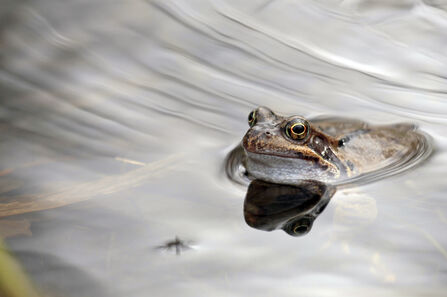
Ian Wade
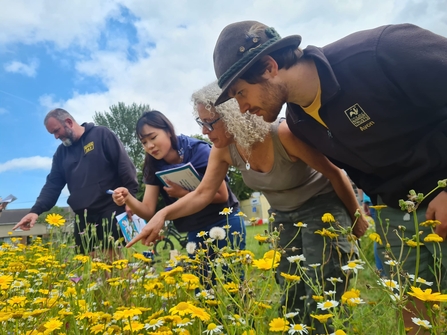
Thornycroft Wildflower Survey (C) Really Wild Lockleaze
- You can create an account for the BRERC website here, and follow the instructions on the home page. You’ll need to be verified before you can submit records
- Once your account is created, you can report individual sightings such as a group of 7 hedgehogs, or a single red kite, to this page: Submit a sighting | BRERC Online Recording.
- If you wish to do more of a survey, and collate many different sightings or species, there are a variety of forms you can print off or download here: BRERC Recording Forms which vary slightly based on whether you are going birding, looking at botany, or doing a general mixed survey of everything you find.
- Please submit the e-forms, or photos of printed record sheets to the email inbox records@brerc.org.uk.

Anyone can take part in monitoring wildlife
There are many reasons why wildlife recording is important:
- Your recordings make a difference to help protect areas.
Eg. Shows rare or protected species that may be developed. Or invasive species is spotted. - It shows the impact of activities and tracks changes over time.
Eg. More wildlife from planting wildflowers or trees - Highlights local species - raising awareness gets more people connected with local green spaces, also increasing our understanding of the natural world.
- Connects us with nature and contributes to nature recovery.
- Provides data/ evidence about the state of nature locally and what action needs to be taken.
It's easy to do!
No experience is needed, taking a photo on your phone or noticing nature around you is all you need. You can learn as you go and share what you see. Many local groups will take part in National monitoring schemes too, which makes it even easier to take part.
Some activities take 5-10 minutes! You could even do this on a walk to school. It can turn a mini walk into a challenge or adventure and you might start noticing things you hadn't seen before.
Other ways to record
Apps such as Nature Finder, Big Butterfly Count, Merlin Bird ID, iNaturalist, and PlantNet are all good ways of narrowing down what you’re looking at or listening to, and it helps to include a photo with any sightings on the BRERC recording website so they can be verified.
For botanical guides, a Collins Flowers Guide or Francis Rose’s Wildflower Key are good places to start. Record Pool is a service run specifically for amphibian and reptiles, and is great for recording toads, frogs, newts and their spawns. All records sent here are also fed back to LERCs, but also help Amphibian Reptile Group UK.
iNaturalist is fine to use, but please note… If you do wish to use iNaturalist and want your records to be useful, please ensure you do not anonymise the data, do not obscure the location, make sure you manually enter the location details, and change your licensing settings from the default to CC0. These are all features that make records usable for LERCs.
Organised surveys to get involved with

Natural History
The above survey calendar from the Natural History Museum is a fantastic way to get into surveying - it details surveys throughout the year to suit varying skill levels and species.
Here are some 2026 calendar highlights, suitable for all abilities:
- PondNet Spawn Survey (December 2025–May 2026)
Frogs and toad sightings in local ponds and ditches with the Freshwater Habitats Trust. - Big Garden Birdwatch (23–25 January)
Record bird sightings in your garden or local green space with the RSPB. - National Plant Monitoring Scheme (Twice per year: April/May and August/September)
Record plant 'indicator species' in an assigned 1km square with NPMS. - Sunset Survey (April–October)
Record bat sightings at dusk with The Bat Conservation Trust. - National Reptile Survey (4 visits March-June and 2 visits August-October)
Monitor reptile populations with Amphibian and Reptile Conservation. - Big Butterfly Count (17 July–9 August)
Spot butterflies and day-flying moths with Butterfly Conservation. - Big Seaweed Search (record anytime, 2026 events TBC)
Seaweed is a great climate change indicator. Take part with the Marine Conservation Society. - City Nature Challenge (24-27 April)
Share picture of wild plants and animals with the Natural History Consortium.
Intro to Community Ecology: Monitoring and Recording (https://www.youtube.com/watch?v=ltBw_7f8mro)
Amie Cook, Team Wilder Community Ecologist

David Parkyn
Avon Wildlife Trust is monitoring the growing beaver population on the Bristol Avon and its tributaries. If you see a beaver, or signs of a beaver such as damming or tree gnawing, please help us by recording your sighting on the form. There’s a handy spotter’s guide on there with tips for what to look out for.
Local survey: Flappy hour in Pill
Sue Adamson from Pill has a passion for bats. She brought together local people with the same interest and created ‘Flappy Hour’, inspired by the Bat Conservation Trust’s sunset surveys. Everyone is encouraged to spend an hour at sunset looking for bats, a simple, sociable way to take action for nature and connect with others locally.
Bats are fascinating nocturnal mammals and important indicators of local biodiversity. From April to October, Flappy Hour takes place in a variety of local spots including gardens, green spaces, churches and old railway bridges. So far, the group has recorded 13 of the 17 UK bat species, submitting data to BRERC and the North Somerset Bat Survey.

WildNet - Emma Bradshaw
Bat walks are open to everyone and are especially popular with families. Sue recalls local children watching bats “like fireworks” and one even asking for a bat detector for Christmas. Flappy Hour shows how community action can inspire curiosity, connection and care for local wildlife.
Please note: Bats are a European protected species, so licensed surveys are required beyond presence/absence surveys. Joining an organised bat walk or survey is recommended.
Find out more about Sue's flappy hour: Team Wilder wildlife champions podcast
Facebook: The Daily Pill and Nature in the back gardens of Pill and Easton in Gordano
If you're thinking about getting involved in a survey, I'd recommend going to an organised survey, such as with the Bat Conservation Trust who have local bat groups.Flappy Hour

Tom Marshall
Local survey: on site at Grow Wilder
Surveying in one place, over time is powerful and insightful. It builds a clear picture of biodiversity and provides evidence of increases or decreases in species. Grow Wilder has used iNaturalist (with the settings changed as detailed above) to learn more about the site and see an increase in biodiversity as a result of wildlife gardening.
Anyone on iNaturalist can log species sightings at Grow Wilder and contribute to the project.

As demonstrated, tried and tested at Grow Wilder on many occasions, wildlife reporting or surveying can demonstrate increases or decreases in species according to habitat. A greater diversity of plants determines a greater diversity of invertebrates.
Eg. Planting honeysuckle is amazing for attracting long tongued moths, such as the honeysuckle moth and the hummingbird hawkmoth. By also planting Lady's bedstraw, their full life cycle is supported as it provides food for the caterpillars of these moths.
Celebrating citizen science in Frampton Cotterell
Since 2021, David, Community Nature Officer at Frampton Cotterell Parish Council, has helped build an impressive programme of citizen science and wildlife monitoring, showing just how powerful local recording can be. This is what's being monitored:
- Local surveys, national schemes and everyday wildlife recording.
- A wide range of species and habitats, from Otters and Harvest Mice to Bats, Birds, Slow Worms, Butterflies, Moths, Plants and Fungi.
The community now maintains a parish species list of over 1,450 species, supported by a local BS36 Facebook group, an iNaturalist project, and an annual City Nature Challenge BioBlitz. Wow!
Why monitoring matters
For David, monitoring is enjoyable, meaningful and impactful. It helps people connect with nature and build knowledge and confidence. Records contribute to local and national scientific datasets. Survey results have directly influenced decision-making. Importantly, monitoring evidence helped make the case for a new nature reserve in Frampton Cotterell and secure legal recognition for two local sites (an Ancient Woodland and an SNCI).
This shows how citizen science can turn observations into real protection for nature.
A community effort
Monitoring isn’t done alone. Some surveys are open to everyone, while others are supported by volunteers and members of the Frampton Cotterell Nature group. Local residents also lead activities, including:
- A monthly Moth Club in summer
- Recording House Martin and Swift nest sites
What happens to the data?
Records are shared with: National recording schemes, Local Environmental Records Centre (BRERC) and platforms such as BirdTrack, iNaturalist and iRecord. The group is now developing repeatable methods and transects, helping ensure monitoring is consistent and useful long-term.

David Hanks
A standout discovery
One of the most exciting finds so far is Dung Bird’s Nest Fungi (Cyathus stercoreus) recorded at only the third site in England. The discovery was confirmed with expert support from the British Mycological Society, with samples sent to Kew Gardens for DNA sequencing as part of the Darwin Tree of Life project.
David’s advice for getting started
- Start a species list for a site – it’s fun and full of surprises
- Follow your interests and look for national schemes to join
- Use tools like iNaturalist to help with identification, but double-check
- Explore resources such as the Natural History Museum, NatureSpot, WildGuides, and specialist Facebook groups
Whether you join monitoring in Frampton Cotterell or start recording wildlife where you live, David’s story shows that anyone can contribute to citizen science. Every record matters and can shape the future of local nature.

© Connor Meadows
How monitoring helped Emma put hedgehogs on the map
Living in urban Ashley Down, Emma never expected hedgehogs to be nearby. Concerned about wildlife decline, she decided to start small and monitor her garden, simply to see what might be there.
She cut a small hedgehog hole in her fence and set up basic monitoring: a footprint trap made with sand and a small trail camera. She didn’t expect results, but within two weeks she captured her first footage of a hedgehog visiting her garden! That moment changed everything.
Why monitoring matters
Monitoring gave Emma:
- Proof hedgehogs were there, even in a built-up area
- Photos and videos to share, which sparked interest and excitement
- Confidence to talk to neighbours and encourage small changes
By sharing sightings on her street WhatsApp group and calling them “our hedgehogs”, Emma helped others feel connected. Neighbours have started to add hedgehog holes, food and shelter. A hedgehog highway is the dream!
In just 18 months, Emma went from no sightings to 4-5 regular visiting hedgehogs in an urban garden, as well as a street more aware of how everyday actions for nature make a difference.
Emma’s advice
“Monitoring doesn’t have to be complicated. Start small, be curious, and share what you find. Once people can see wildlife is really there, they care.”
Monitoring is often the first step that turns curiosity into evidence, and evidence into action.
Find out more about Emma and helping hedgehogs.
Final word
By building a better picture of the wildlife that you know exists in your area, we can help local authorities prioritise areas of value, we can track the spread of invasive species, and we can understand the populations of our wildlife like never before.
Resources


National Lottery Heritage Fund
Advice given by the Team Wilder Community Ecologist, was made possible with the National Lottery Heritage Fund.

(C) Hannah Bunn
Be part of Team Wilder
All actions for nature collectively add up and creates life for people and wildlife.
Share your actions for nature to inspire and motivate others.
Talk about what you do to make these actions part of everyday life.
Share and tag us on @avonwt on social media as well.
Log your actions for nature on the map

