

Winterbourne and Frome Valley Environmental Group
Signage in the community
Community signs are power!
Community signs about nature are powerful, however professional and whatever they’re made from. They don’t just inform people, they have the power to shape how local people value and notice local wildlife, green spaces and “messy” natural areas.
Here’s why they’re so important and impactful:
- They can change perceptions. If an area looks ‘messy’ it may in fact be an amazing habitat.
Transform ‘messy’ into ‘intentional’ which communicates the purpose - Educational. When explaining why the grass is long or which butterflies (life cycle) the wildflowers support or how log piles or dead hedges are supporting local biodiversity.
- Inspirational. People may copy what’s happening to extend a green corridor in their gardens
Be part of something bigger. - Taking action for nature is a social norm. Start conversations, spark action, encourage the knock-on effect. Encouraging long term support for nature.
- Increase and encourage community pride. Improving areas for wildlife benefits people in so many ways!
- Reach of local people – a real sign reaches people on a local level.

(c) Emma Young, Wildlife Champion
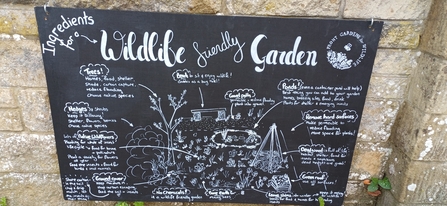
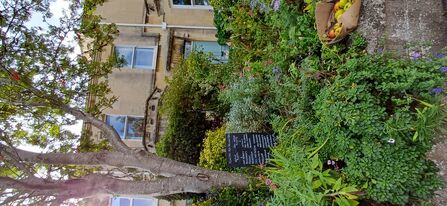
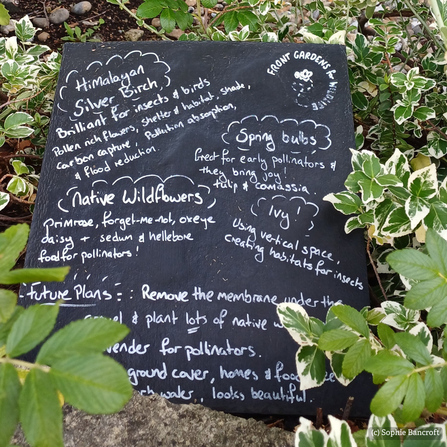
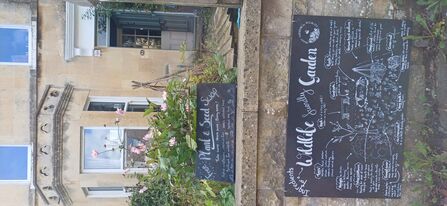
Painted chalkboards in gardens
Sarah Skeels in Bath started wildlife gardening in her front garden, to explain why her garden looked the way it did and highlight all of the important habitat she had created. It also caused a knock-on effect with some of her neighbours doing the same.
The community garden signs above are also painted chalkboards from Thornbury Community Permaculture Project. The site is nestled at the back of a local care home, so was often overlooked by people passing by. The large sign at the entrance and smaller signs directing people where to go highlighted the community garden. There are also smaller beautifully illustrated signs showcasing the compost and sensory bed. The signs were created by one of the volunteers, Torr.
They're really beautiful, low cost and effective!
Sophie Bancroft
Sophie Bancroft
Sophie Bancroft
Sophie Bancroft
Wooden sign with bee hotel
Don't you love the signage post doubling up as a bee hotel? Clever nature friendly design. The group commented "It is surprising how much wildlife actually lands on the post itself".
Thornbury Orchard Group have a collection of signs on site, serving different purposes to inform, educate and inspire people.

Sophie Bancroft of Thornbury Orchard Group
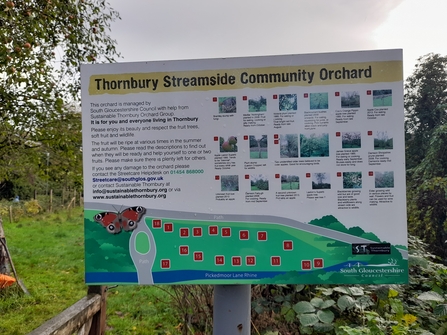
Sophie Bancroft of Thornbury Orchard Group
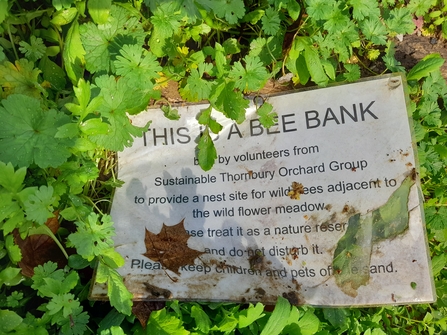
Sophie Bancroft of Thornbury Orchard Group
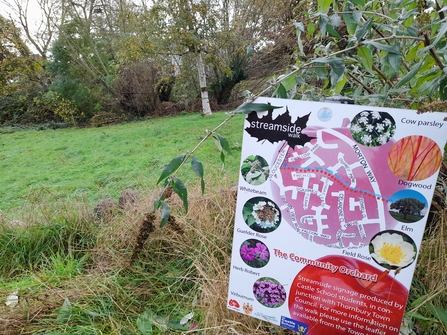
Sophie Bancroft of Thornbury Orchard Group
Tackling anti-social behaviour
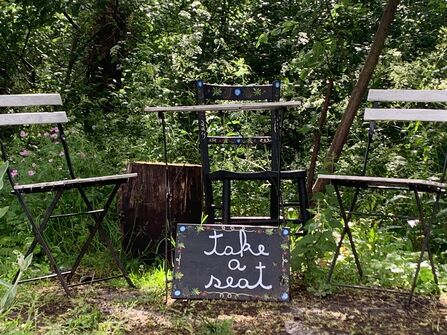
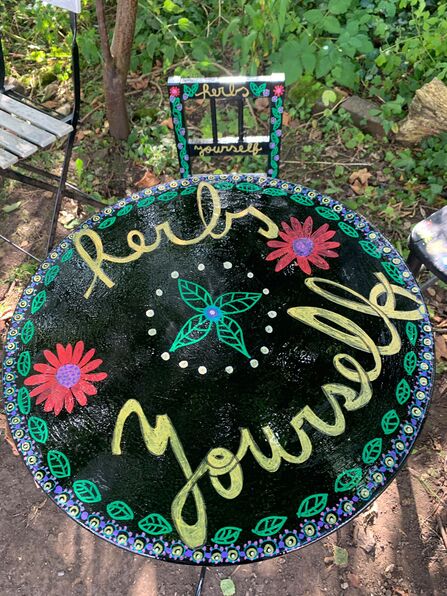
The Herbs Yourself Community Garden in Fishponds have signs that are full of colour and life! The group have come up with a novel way to tackle theft and antisocial behaviour. The group have painted chairs and tables with bright colours, and have added signs that say things like ‘take and seat’ and ‘welcome to your community garden’. This encourages a space where everyone feels welcome, and provides a sense of community autonomy.
Sticking to their environmentally-friendly morals, the group try to use re-use and re-purpose materials, and they have made their main sign out of an old kitchen table, and have used painted rocks to create labels for the herbs they are growing.
Metal signage could also be considered if vandalism is a factor.
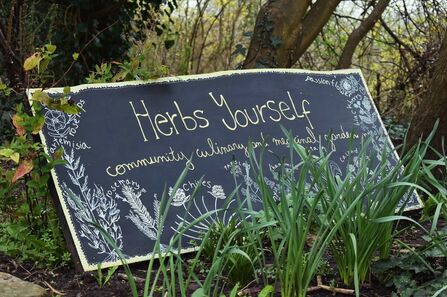
Emma Fennell Hodson
Emma Fennell Hodson
Emma Fennell Hodson
Noticeboards
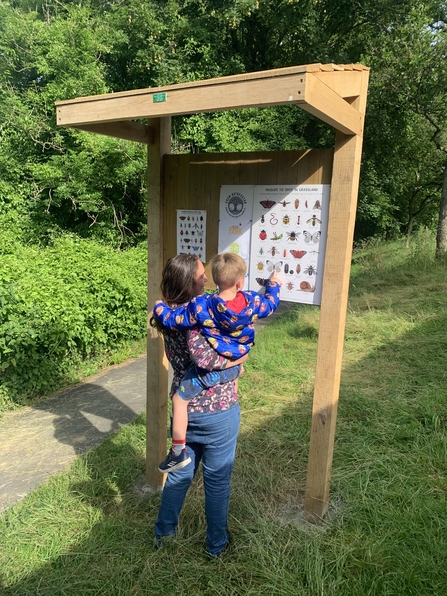
Community notice boards or updates offer hyper local community events, businesses and updates to be communicated. Either for the community to add themselves or officially. They can be at the entrances to nature reserves or community spaces, on high streets or even in supermarkets. For this resource, we'll focus on outdoor community spaces.
Grow Batheaston
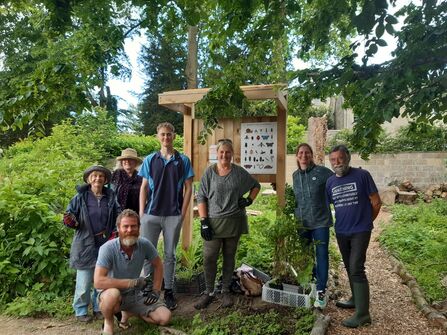
Image copyright / Stephanie Sharkey Avon Wildlife Trust 2024
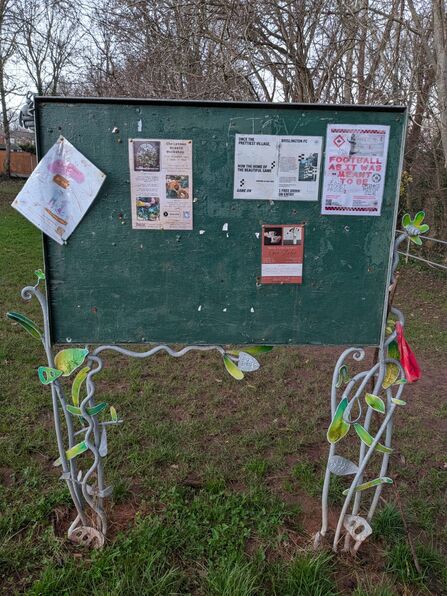
Sophie Bancroft
Interpretation boards
Interpretation boards are designed to educate and inform visitors about the natural or cultural features of a site. There are many different designs available - it is best to choose something appealing to the community! They highlight key things about the site, such as a map of the area, species to spot, history, stories or QR codes for more info.
They're usually image heavy, professionally printed and created, weatherproof and long-lasting. We have them on our reserves and always use oak as it's long lasting, durable and in keeping with our messaging.

Fern and volunteers with new interpretation board (C) Fern Elias-Stagg
Making information fun
Creativity is more than welcome on a sign! Can you involve the community in the design? Can you make the messaging short and punchy for impact?
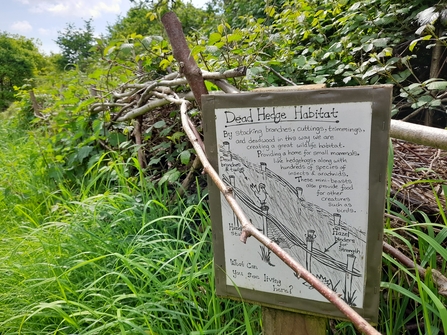
Signage can spark imagination, possibility and actions for nature. A dead hedge sign next to a dead hedge is a great exanple of showing the benefits of craeting habitats at home as well as in the community.
Marian Hill from Buzz and Skuttle uses creativity and amazing artwork to encourage communities notice, learn about, see the beauty and protect the insects that live alongside us, no matter the size of the space. Marian Hills passion and dedication is clear and there are many free resources available to help spread the word about the importance of the creatures around us.
At Grow Wilder, you can learn about wildlife gardening by walking around the reserve and seeing habitats for yourself, with supporting signage to highlight habitats, helping to create green corridors and scale up much needed actions for nature.
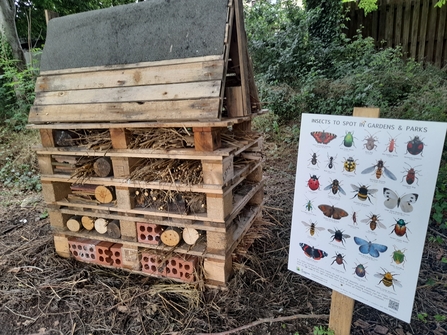
Blooming Whiteway
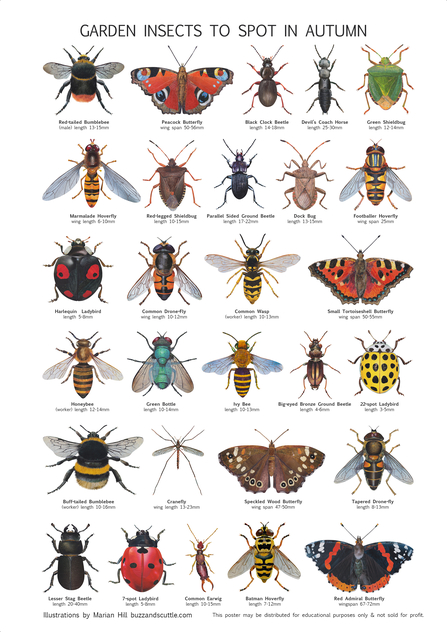
Marian Hill
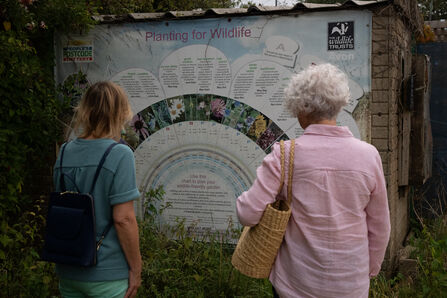
Stephanie Chadwick

Emma Fennell Hodson
Sophie Bancroft
Sign materials and budget
It's best to use what you have available to you! Are there any local people with contacts in a signage company? Or a designer who could help create the signs? It is always best to get a few quotes to compare and get the best deal. Prices are approximate and should replace a real quote according to your community needs, prices below give a very rough idea.
- At Avon Wildlife Trust reserves, we use oak as it is natural, in keeping with surroundings and environmentally friendly.
Estimated cost: £200 - £450+ (depending on size, quality, if handcrafted etc). - Metal signs are durable and a good option if vandalism is a consideration.
Estimated cost: £25 - £400+ (depending on size, quality and quantity ordered). - Recycled plastic boards work well as they are weather resistant.
Estimated cost: £80 - £250+ (for free standing plastic panels) - Aluminium composite are lightweight and durable.
Estimated cost: £30 - £100+ (for outdoor with graphics plus installation). - Quick and cheap signs are made from laminated paper - a popular option for very short-term signs but not environmentally friendly.
Estimated cost: £2 - £10+ (depending on how many are created, it may be likely someone has access to a printer and laminator). - Chalkboards with permanent pens are great to guide people around.
Estimated cost: £10 - £100+ (depending on the size - small boards are effective too). - Painting stones is a fun and accessible small way to portray information.
Estimated cost: £0 if you have paint/permanent marker pens, time and creativity! Varnish also helps. Or £10-£20+ to purchase materials.
Find a Funder is a directory or local funding opportunities for community groups, small organisations and schools.

Blooming Whiteway
Signage text and design advice
- Keep the message short and friendly.
Eg. 'We’re leaving this space for butterflies, birds & bees.' - Make the purpose/title obvious as people pass by.
Eg. 'Wildlife habitat area' - Explain the why to help educate.
Eg. 'We mow less often to help wildflowers grow' - Use positive words, avoiding 'don't' and 'no' to show why it's good.
Eg. 'Do not disturb the plants' vs 'This wild area is home to nesting plants, thanks for letting them thrive'. - Make it accessible for everyone with no jargon.
Eg. A picture of a butterfly with a fun fact. - Add a QR code for more info, keeping text down to a minimum but allowing people to find out more.
- Use 'we' language to help build community.
Eg. 'We're helping nature thrive here together'. - Use consistent branding (such as colours and fonts) to help identify your group or this type of sign.
- Involve local residents in the design to encourage shared ownership and local pride.
More design ideas
The Frome Valley Growing Project in Frome is an ever-evolving, dynamic space that welcomes everyone. The group have both wildlife and food-growing areas, and have recently used terracotta tiles to create signs for their forest garden, where they have both medicinal and culinary herbs for people to enjoy.

Emma Fennell Hodson
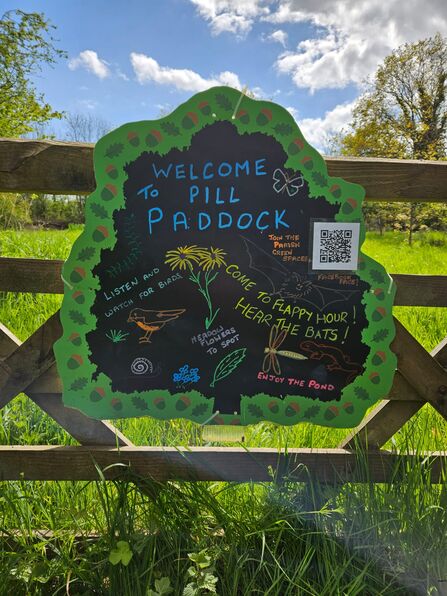
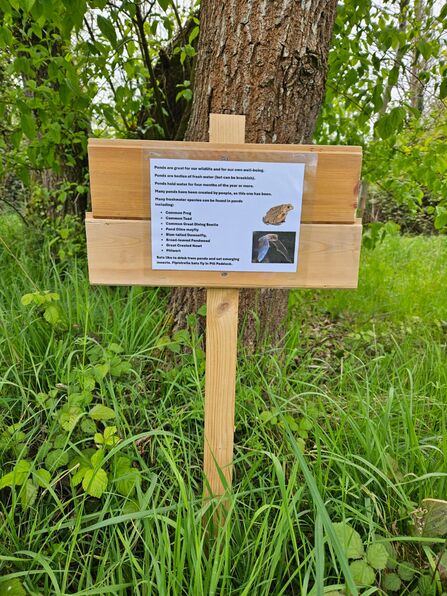
Signage has become an important part of the green spaces managed in Pill. With several local wildlife groups in the area, the community is passionate about maintaining and managing their local green areas with nature at the forefront of their decision-making.
The Pill and Easton in Gordano Wildlife Group have put up engaging and informative signs, which tell people which species to look out for, as well as how to best respect and enjoy nature while being in these spaces. BS20 Wildlife Champion, Sue, has had feedback that members of the community are visiting the green spaces specifically to look at the sings, with grandparents taking their grandchildren there to look for the species updated regularly on the signs. The signs have also attracted the community to local events, including the excellently-named ‘Flappy Hour’ (community bat walks).
Emma Fennell Hodson

Emma Fennell Hodson
Emma Fennell Hodson
Resources


(C) Hannah Bunn
Be part of Team Wilder
All actions for nature collectively add up and creates life for people and wildlife.
Share your actions for nature to inspire and motivate others.
Talk about what you do to make these actions part of everyday life.
Share and tag us on @avonwt on social media as well.
Log your actions for nature on the map

